
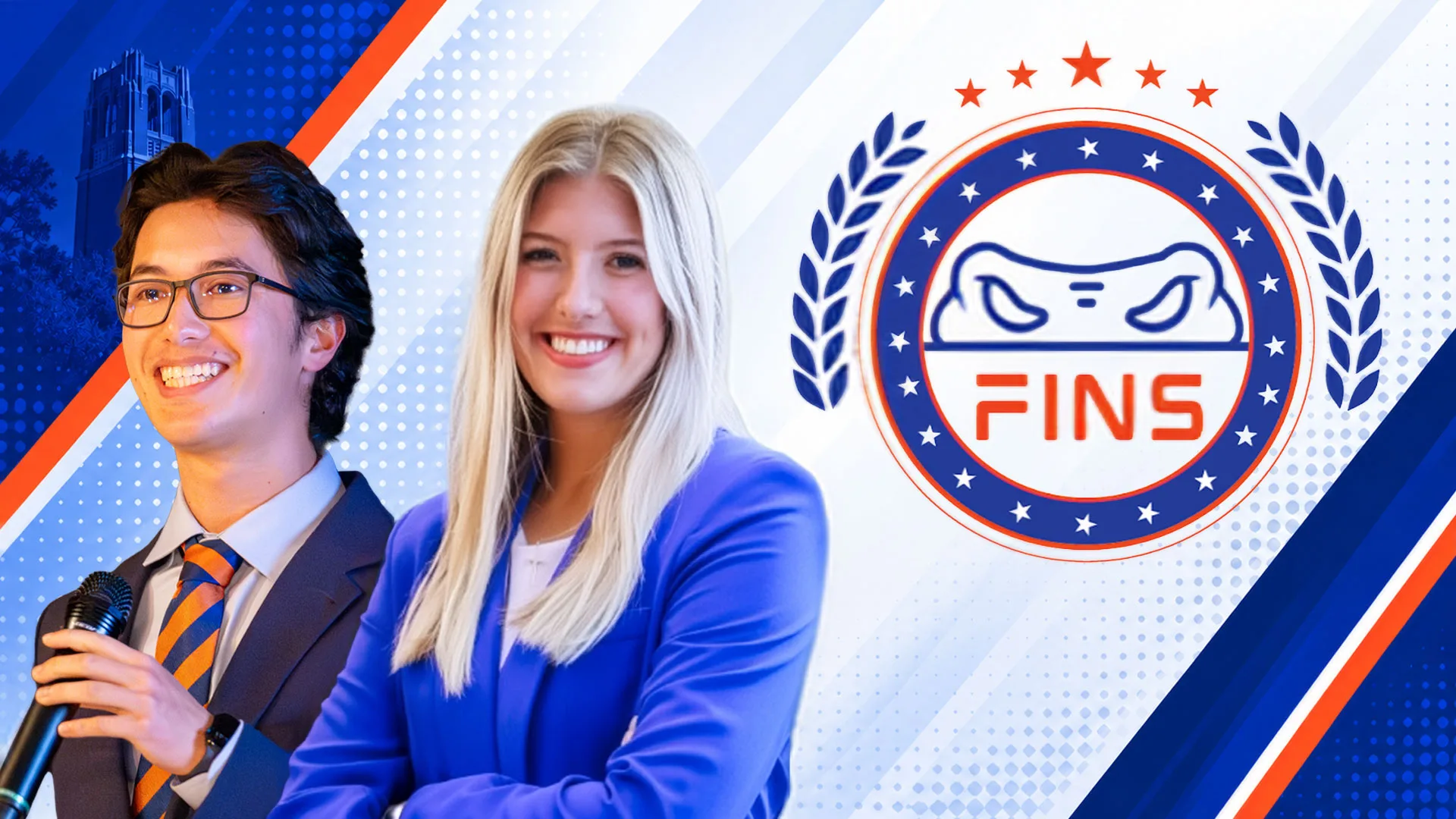
It can be hard to picture what a career in national security could look like. University of Florida engineering student Paige Anderson started exploring the possibilities through research and conversations with people working in the field.
Those opportunities came through the Florida Institute for National Security’s Talent Pipeline at UF.
“When I joined the program, I was interested in national security, but I didn’t really know how broad the field was,” Anderson said.
The yearlong program combines research, mentorship and career preparation to help students enter the national security workforce. One goal is to help students prepare for and pursue security clearances before graduation, reducing delays in starting jobs requiring access to classified information.
Now a nuclear engineering master’s student, Anderson earned her bachelor’s degree in computer science with a minor in economics in May 2025. Through the Florida Institute for National Security, known as FINS, she took on national security research and met professionals who helped her understand where that work could lead.
Students in the program work alongside UF researchers on projects applying artificial intelligence and data science to national security challenges. They also receive career guidance, meet professionals from government and industry, and receive help pursuing internships.
The research challenged Anderson to become a better communicator. Explaining the impact of technical work, especially in nuclear engineering, was more difficult than she had expected. Presenting that work gave her opportunities to practice.
For Landon Amaba, an electrical engineering student, FINS offered an introduction to research early in his college experience. He joined as a freshman and credits the program with helping shape his career.
“My favorite part about the program was getting to work with other like-minded students,” Amaba said.
Working across disciplines showed him how differently people could approach the same problem. Connections with professionals also gave him a closer look industry trends and how his skills could fit.
The relationships Anderson built through FINS have continued beyond her time in the program. She and Amaba still work together, and the professionals she met remain mentors as she considers her next steps.
For Anderson, that ongoing support made the community valuable. She met people who care about the mission of national security and want to help students find their place in it.
Those connections helped her discover opportunities to contribute while at UF and after graduation. A field she had once been unsure about pursuing became one she could explore with research experience and mentors to guide her.
“I would definitely say that this program really helped me to launch my career,” Anderson said.