
“Control-Oriented Learning for Same-Day Autonomy”
Thursday, Oct. 2 at 1:00pm
MALA 7200
Add to Calendar
Abstract
Autonomous systems are expected to adapt to new tasks and environments with little prior data, operate within the constraints of physical laws, and satisfy rigorous specifications for safety and performance. Meeting these demands requires moving beyond purely data-driven learning to hybrid methods that integrate control-theoretic reasoning, physics-based models, and formal specifications with modern machine learning. This talk will present a control-oriented perspective on learning that enables autonomy at operationally relevant timescales. I will highlight recent results showing how embedding physical knowledge and structured representations into learning architectures yields dramatic gains in data efficiency, generalization, and verifiability. These methods support on-the-fly adaptation and provide pathways to performance guarantees, even when data are scarce and environments are uncertain. The talk will conclude with a broader outlook on how control, learning, and formal methods together can bring trustworthy, rapidly deployable autonomy within reach.
Biography
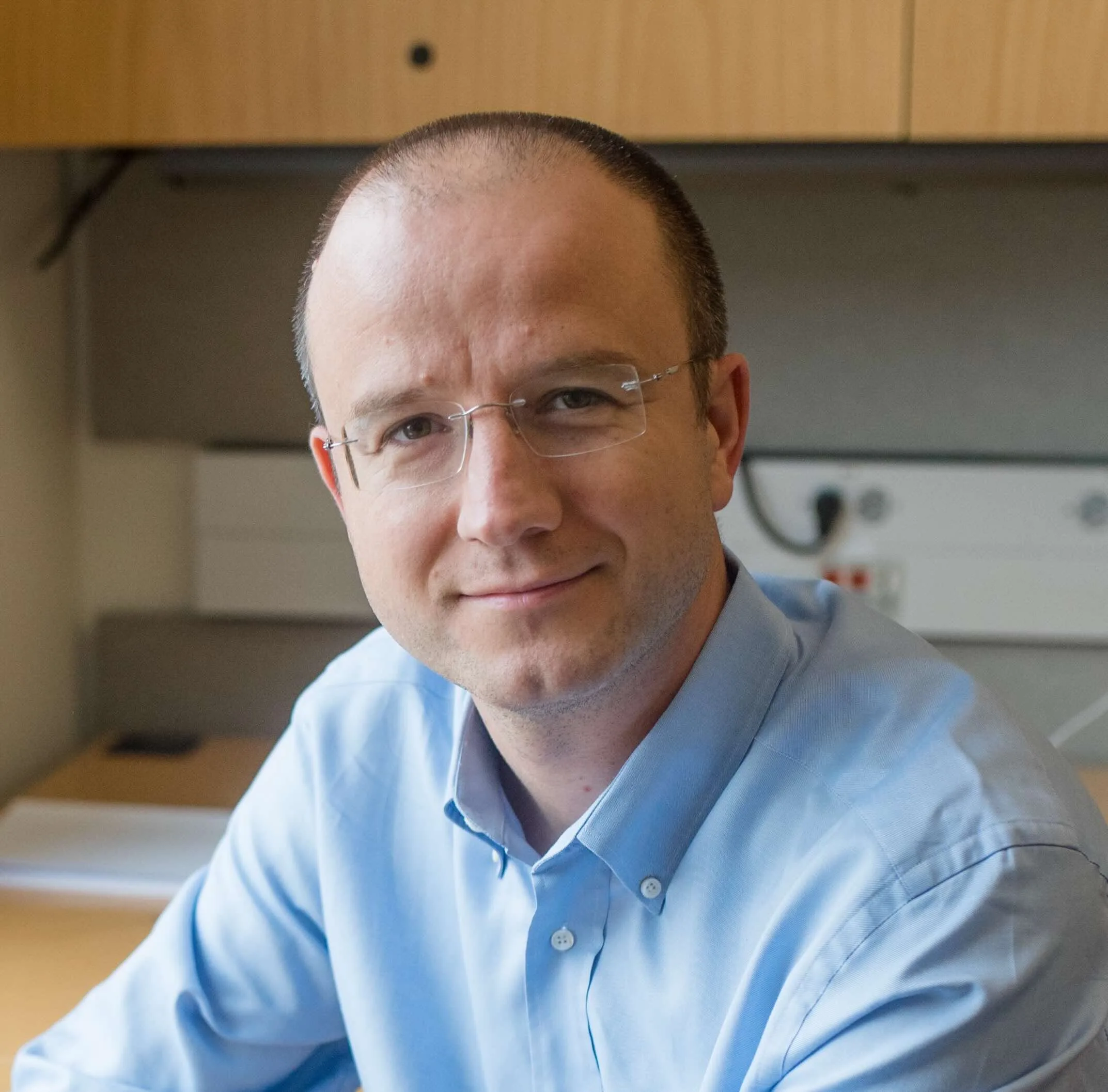
Ufuk Topcu, PhD, is a professor in the Department of Aerospace Engineering at The University of Texas at Austin, where he holds the Judson S. Swearingen Regents Chair in Engineering. He is a core faculty member at Texas Robotics and the Oden Institute for Computational Engineering and Sciences and the director of the Center for Autonomy. His research focuses on the theoretical and algorithmic aspects of the design and verification of autonomous systems.
Topcu obtained his Ph.D. from the University of California, Berkeley, in 2008. Before joining UT Austin, he was with the Department of Electrical and Systems Engineering at the University of Pennsylvania. Topcu’s research focuses on the theoretical and algorithmic aspects of the design and verification of autonomous systems, typically at the intersection of formal methods, reinforcement learning, and control theory. He takes a relatively broad view on autonomy and tends to tackle abstract problems motivated by challenges cutting across multiple applications of autonomy.
Topcu leads several large-scale, multi-institution projects, including an Air Force MURI project, a NASA ULI project, and an NSF CPS Frontier project. His research contributions have been recognized by the NSF CAREER Award, the Air Force Young Investigator Award, the IEEE CSS Antonio Ruberti Young Researcher Prize, and Oden Institute Distinguished Researcher Award. He was a member of the Computing Community Consortium Council.