
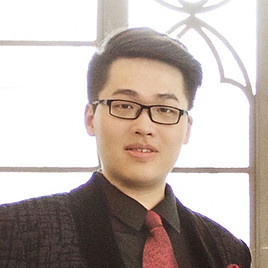
“Forging the Pathways towards Truly Efficient AI—From Extending to Beyond Moore’s Law”
Thursday, Jan. 23 at 1:00pm
MALA 5050
Add to Calendar
Abstract
The exponential scaling of artificial intelligence (AI) necessitates unprecedented increases in computational power. This soaring demand, paired with the waning momentum of Moore’s Law, leads to surging energy costs and carbon footprints, raising serious sustainability concerns. While optimizing traditional computing methods remains the key to addressing the current computing power crunch, exploring innovative post-Moore computing paradigms presents a transformative pathway toward sustainable AI development.
In this talk, Dr. Geng will present a dual-pathway research program to achieve truly efficient AI systems, including a short-term pathway of optimizing traditional digital computing methods and a long-term one of discovering beyond-Moore computing paradigms. The short-term solution focuses on developing self-adaptive AI computer architecture, introducing hardware flexibility to handle algorithmic irregularities in AI workload, the core bottleneck in achieving both efficiency and expressiveness. The long-term pathway aims to uncover and harness the untapped but massive computational power from nature through the development of DS-Machine, a brain-inspired AI compute substrate that embodies dynamical systems as processors. Furthermore, Geng will discuss the deployment of this dual-pathway research in real-world scientific discovery, with applications in power grid management and nuclear fusion. Geng will conclude with a vision for the future development of AI and computing, emphasizing the immense potential and profound significance of organically integrating innovations and discoveries from both pathways.
Biography
Dr. Tony Geng is a tenure-track assistant professor in the ECE and CS departments of the University of Rochester (UR). He also holds secondary appointments with the Goergen Institute for Data Science and Artificial Intelligence. Before joining Rochester in 2022, Tony worked in the Physical & Computational Sciences Directorate (PCSD) at Pacific Northwest National Laboratory (PNNL) of Department of Energy (DOE). His research interests are at the intersection of Computer Architecture & Systems, Generative AI, High-Performance Computing, Beyond-Moore Computing. Tony’s papers have appeared in many prestigious conferences and journals e.g. ISCA, MICRO, HPCA, OSDI, ICLR, ICML, NIPS, AAAI, CVPR, DAC, SC, ICS, TPDS, TC, and TIP.