
Category: Research

Dalir’s CHIP Lab Works to Revolutionize Low-Power Components for AI Hardware Accelerators
April 7, 2025The CHIP Lab, led by Hamed Dalir, Ph.D., has been awarded up to $435,000 by the Naval Surface Warfare Center, Crane Division, to pioneer a transformative approach to analog-to-digital (ADC) and digital-to-analog (DAC) conversion for next-generation AI accelerator processors.
Read more: Dalir’s CHIP Lab Works to Revolutionize Low-Power Components for AI Hardware Accelerators »
Heidari Works to Create Tunable Lasers
April 4, 2025A new paper by researchers at UF Electrical & Computer Engineering has recently been published in ACS Photonics, outlining recent work in the area of tunable lasers. “Tunable Laser Using Transverse Cavity Surface Emitting Laser Working near Exceptional Point,” was authored by Elham Heidari, Ph.D., and her research group.
Read more: Heidari Works to Create Tunable Lasers »
Ruchkin Receives NSF CAREER Award to Make Cyber-Physical Systems Aware of Their Limitations
March 25, 2025Ivan Ruchkin, Ph.D., has received funding from the NSF in support of his CAREER project “Rigorous Assumption Engineering for Learning-Enabled Cyber-Physical Systems.”
Read more: Ruchkin Receives NSF CAREER Award to Make Cyber-Physical Systems Aware of Their Limitations »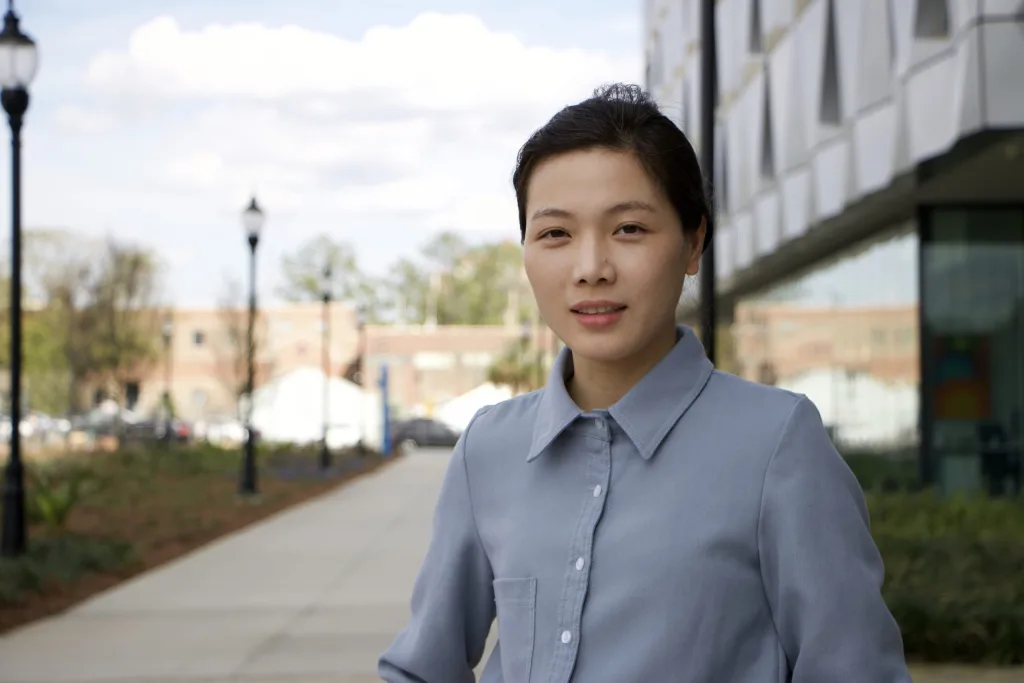
Wu Works to Make Computers More Brain-Like
March 14, 2025Imagine a computer that works more like your brain—fast, smart, and able to learn from experience. Thanks to funding from the National Science Foundation, ECE Assistant Professor Yingying Wu is helping to make this dream a reality.
Read more: Wu Works to Make Computers More Brain-Like »
Think you can cheat with AI? A UF professor creates watermarks to detect AI-generated writing
March 5, 2025Using UF’s supercomputer HiPerGator, ECE Assistant Professor Yuheng Bu and his team are working on an invisible watermark method for Large Language Models designed to reliably detect AI-generated content – even altered or paraphrased – while maintaining writing quality.
Read more: Think you can cheat with AI? A UF professor creates watermarks to detect AI-generated writing »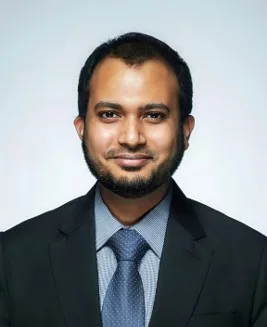
ECE PhD Student Receives Prestigious MTT-S Fellowship
February 26, 2025Asif Iftekhar Omi, an ECE Ph.D. student working with Dr. Baibhab Chatterjee, has been selected to receive the IEEE MTT-S Graduate Fellowship for Medical Applications, among the most prestigious of accolades in microwave engineering.
Read more: ECE PhD Student Receives Prestigious MTT-S Fellowship »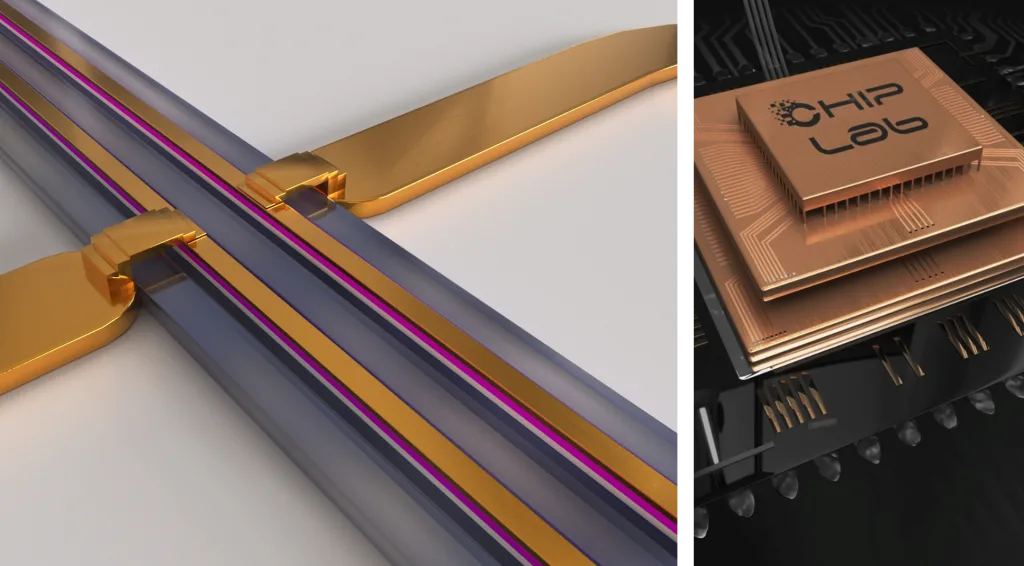
CHIP Lab Secures Funding for Cutting-Edge Photonics Accelerators
January 8, 2025The CHIP Lab, led by Dr. Hamed Dalir, has received $435,000 in funding from SRC to enhance photonic integrated circuits (PICs) and ferroelectric-tunable transparent conductive materials for high-performance computing applications.
Read more: CHIP Lab Secures Funding for Cutting-Edge Photonics Accelerators »
Dalir Receives Funding to Develop Next-Generation Oilwell Monitoring Devices
January 3, 2025Dr. Hamed Dalir has received funding to advance research on a “Novel Long-Range Acoustic Method for Decadal Monitoring of Plugged and Abandoned (P&A) Wells.” This groundbreaking project aims to revolutionize the monitoring of P&A wells using advanced acoustic techniques.
Read more: Dalir Receives Funding to Develop Next-Generation Oilwell Monitoring Devices »
Wu Receives NSF CAREER Award to Create New Quantum Devices
December 23, 2024ECE Assistant Professor Yingying Wu has received a $546k NSF CAREER Award in support of her project, “Transforming Quantum Spintronics with Novel 2D Magnetic Transistors and Diodes.” This project will focus on creating new quantum hardware devices like magnetic transistors and diodes that use skyrmions.
Read more: Wu Receives NSF CAREER Award to Create New Quantum Devices »
Over $160M in New Semiconductor Research Funding
December 11, 2024In a transformational year for the Department of Electrical & Computer Engineering at the University of Florida, more than $160M in funding for semiconductor research was secured in 2024.
Read more: Over $160M in New Semiconductor Research Funding »