
Category: Research

Ivan Ruchkin Is Building Worlds
July 11, 2025Ivan Ruchkin, Ph.D., builds worlds. His recent work, mostly along two major themes, concerns the way autonomous agents perceive the world and, indeed, the way in which the agents’ worlds are constructed.
Read more: Ivan Ruchkin Is Building Worlds »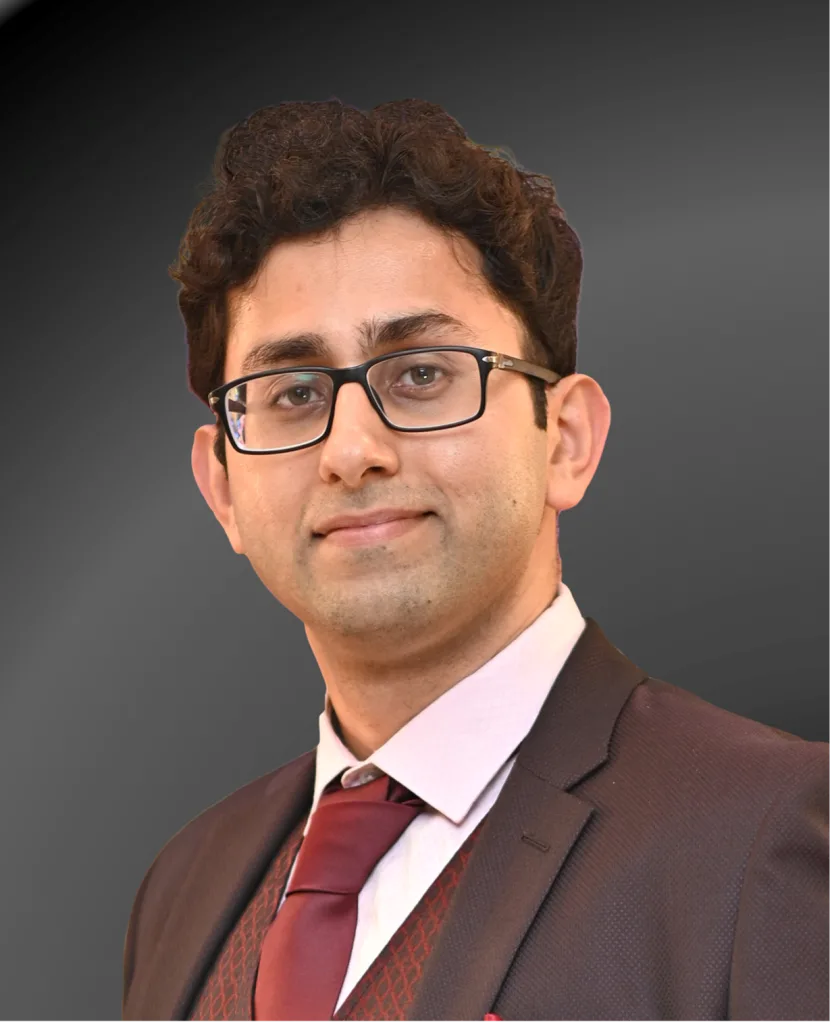
Chatterjee Receives NSF CAREER Award to Advance the Future of Medical Electronics through Body-Coupled Network of Devices
July 11, 2025Baibhab Chatterjee, Ph.D., assistant professor in the Department of Electrical and Computer Engineering at the University of Florida, has received a prestigious National Science Foundation (NSF) CAREER Award, the agency’s highest honor for early-career faculty. His funded project, “MED-IoB: Transforming Medical Electronics using Distributed Internet of Bodies (IoB) for Powering, Sensing, Communication and Synchronization,” seeks to revolutionize implantable and wearable medical electronics by enabling seamless data connectivity and power in a network of devices, leveraging the conductive property of the human body.
Read more: Chatterjee Receives NSF CAREER Award to Advance the Future of Medical Electronics through Body-Coupled Network of Devices »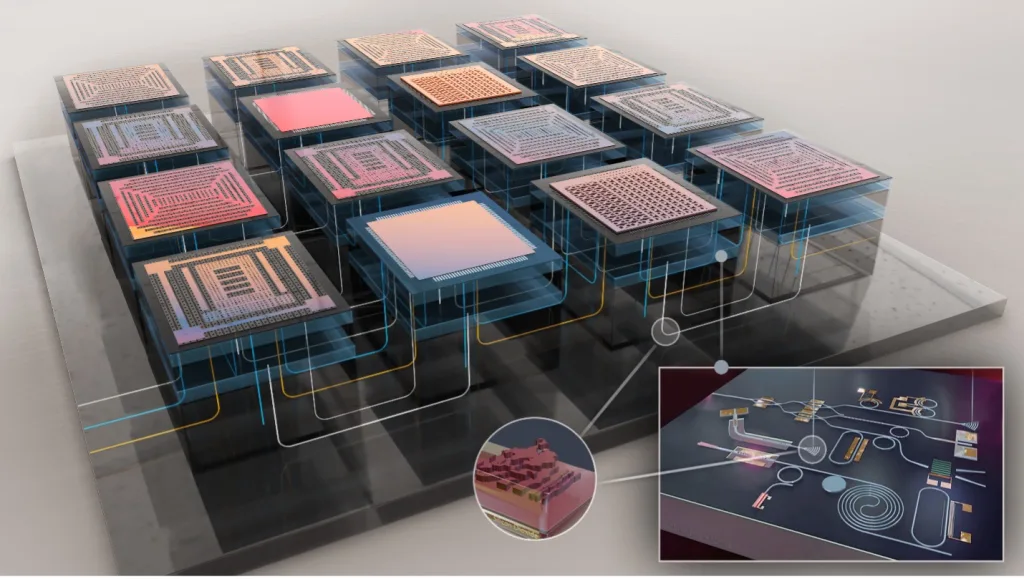
Dalir Joins National Effort to Enable 3D Optical Packaging for Next-Gen AI Chips
May 14, 2025Hamed Dalir, PhD, is part of a nationally-funded initiative to develop a transformative three-dimensional optical packaging platform that redefines how data is routed across and between chips. The project is led by Ali Adibi, PhD, professor in the Department of Electrical & Computer Engineering at Georgia Institute of Technology, in partnership with Dalir, Juejun Hu, PhD, associate professor in the Department of Materials Science & Engineering at the Massachusetts Institute of Technology, and colleagues at AIM Photonics, and nHanced Semiconductor. The team aims to unlock new levels of scalability, bandwidth, and energy efficiency by vertically stacking photonic layers and enabling seamless chip-to-chip optical communication.
Read more: Dalir Joins National Effort to Enable 3D Optical Packaging for Next-Gen AI Chips »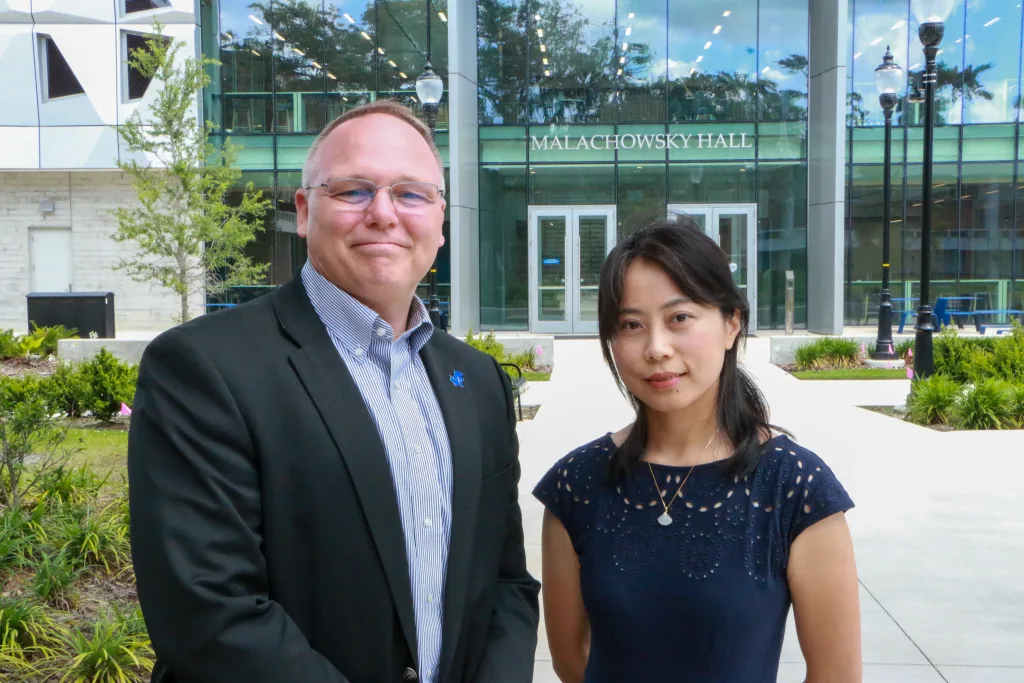
Fu & Dixon Work to Achieve Strategic Dominance
May 6, 2025Dr. Jie Fu (PI) has been awarded $1.3 million in funding from the DEVCOM Army Research Laboratory for “Strategic Planning in Hierarchical Games: Achieving Rapid Dominance in the Uncertain World of Conflict (Shadow).” Distinguished Professor Warren Dixon, chair of the Department of Mechanical and Aerospace Engineering at the University of Florida, serves as co-PI on the project.
Read more: Fu & Dixon Work to Achieve Strategic Dominance »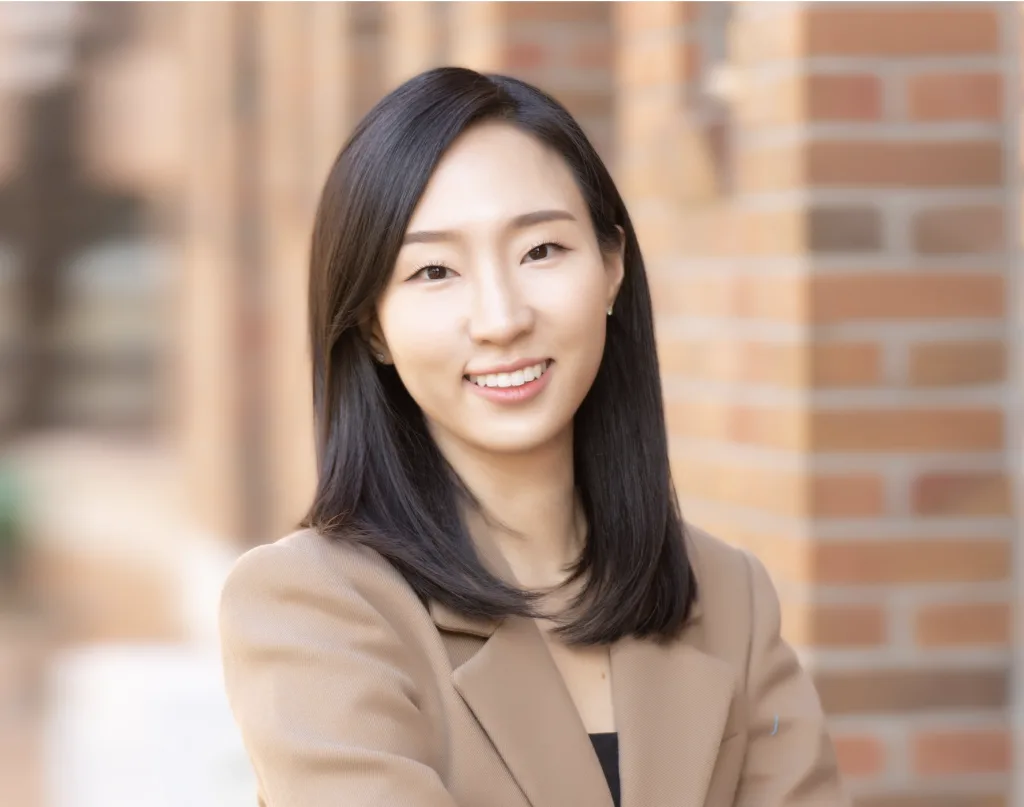
Laura Kim Works to Create Light-Matter Hybrid Quantum Building Blocks
April 18, 2025Laura Kim, Ph.D., has been awarded a DARPA Young Faculty Award in support of her project “Room-Temperature Strong Coupling in Intercalated 2D Plasmonic Systems.” The $500,000, two-year project seeks to unlock quantum phenomena that have traditionally remained exclusive to cryogenic temperatures, bringing them into room-temperature environments by using layered nanoscale materials that confine light with extreme precision.
Read more: Laura Kim Works to Create Light-Matter Hybrid Quantum Building Blocks »
Dalir’s CHIP Lab Works to Revolutionize Low-Power Components for AI Hardware Accelerators
April 7, 2025The CHIP Lab, led by Hamed Dalir, Ph.D., has been awarded up to $435,000 by the Naval Surface Warfare Center, Crane Division, to pioneer a transformative approach to analog-to-digital (ADC) and digital-to-analog (DAC) conversion for next-generation AI accelerator processors.
Read more: Dalir’s CHIP Lab Works to Revolutionize Low-Power Components for AI Hardware Accelerators »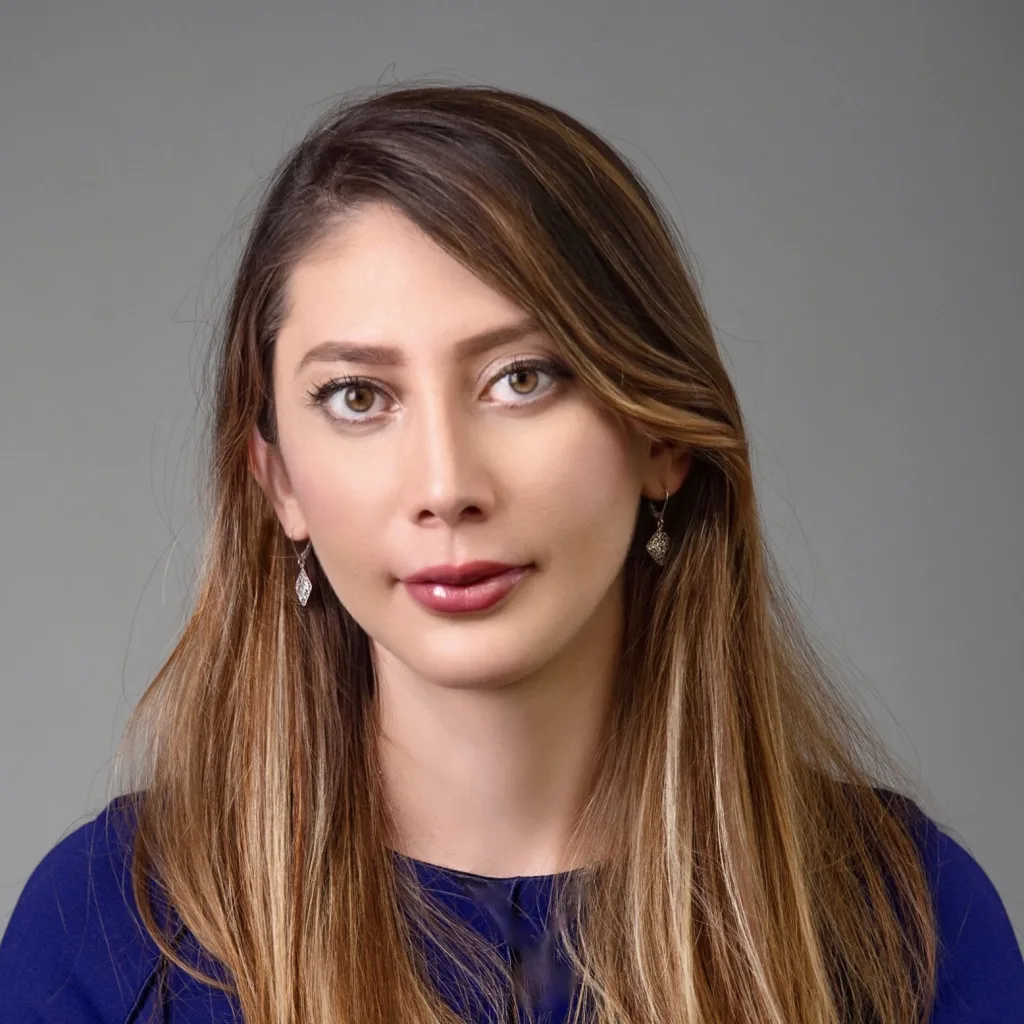
Heidari Works to Create Tunable Lasers
April 4, 2025A new paper by researchers at UF Electrical & Computer Engineering has recently been published in ACS Photonics, outlining recent work in the area of tunable lasers. “Tunable Laser Using Transverse Cavity Surface Emitting Laser Working near Exceptional Point,” was authored by Elham Heidari, Ph.D., and her research group.
Read more: Heidari Works to Create Tunable Lasers »
Ruchkin Receives NSF CAREER Award to Make Cyber-Physical Systems Aware of Their Limitations
March 25, 2025Ivan Ruchkin, Ph.D., has received funding from the NSF in support of his CAREER project “Rigorous Assumption Engineering for Learning-Enabled Cyber-Physical Systems.”
Read more: Ruchkin Receives NSF CAREER Award to Make Cyber-Physical Systems Aware of Their Limitations »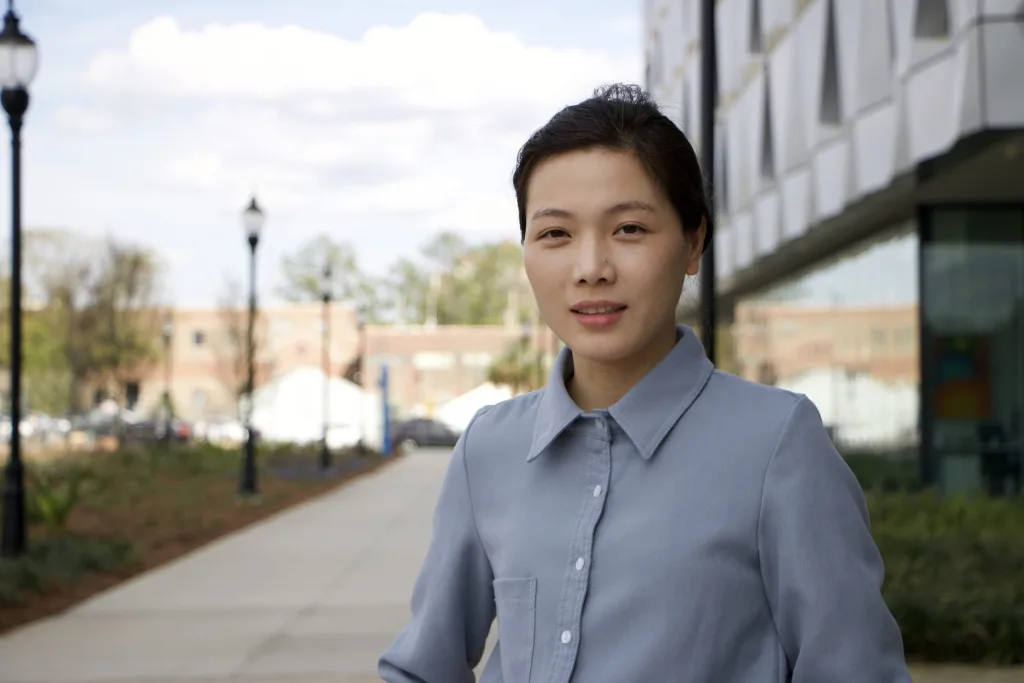
Wu Works to Make Computers More Brain-Like
March 14, 2025Imagine a computer that works more like your brain—fast, smart, and able to learn from experience. Thanks to funding from the National Science Foundation, ECE Assistant Professor Yingying Wu is helping to make this dream a reality.
Read more: Wu Works to Make Computers More Brain-Like »
Think you can cheat with AI? A UF professor creates watermarks to detect AI-generated writing
March 5, 2025Using UF’s supercomputer HiPerGator, ECE Assistant Professor Yuheng Bu and his team are working on an invisible watermark method for Large Language Models designed to reliably detect AI-generated content – even altered or paraphrased – while maintaining writing quality.
Read more: Think you can cheat with AI? A UF professor creates watermarks to detect AI-generated writing »