
Author:

Tech Meets Tide: UF RoboPI Lab Joins Forces for Marine Ecosystem Monitoring
August 12, 2025The RoboPI group at the University of Florida’s Department of Electrical and Computer Engineering, led by Md Jahidul Islam, PhD, recently joined forces with the Ocean Rescue Alliance International (ORAI) and the International SeaKeepers Society to advance marine robotics for ecosystem monitoring. The collaboration focused on testing fully autonomous survey and mapping technologies designed to better understand the growth and health of remote marine habitats.
Read more: Tech Meets Tide: UF RoboPI Lab Joins Forces for Marine Ecosystem Monitoring »
Farahmandi Receives 2024–25 Khargonekar Award
July 28, 2025The Herbert Wertheim College of Engineering (HWCoE) has selected Farimah Farahmandi, PhD, as the recipient of the 2024–25 Pramod P. Khargonekar Award, recognizing the outstanding junior faculty member undergoing tenure and promotion review this past fall.
Read more: Farahmandi Receives 2024–25 Khargonekar Award »Ruchkin Seeks Greater Confidence (in Cyber-physical Systems)
July 25, 2025Ivan Ruchkin, Ph.D., is not satisfied with how state-of-the-art cyber-physical systems deal with anomalies. A project recently funded by the National Science Foundation aims to fill in the gaps in current methodologies.
Read more: Ruchkin Seeks Greater Confidence (in Cyber-physical Systems) »
Ivan Ruchkin Is Building Worlds
July 11, 2025Ivan Ruchkin, Ph.D., builds worlds. His recent work, mostly along two major themes, concerns the way autonomous agents perceive the world and, indeed, the way in which the agents’ worlds are constructed.
Read more: Ivan Ruchkin Is Building Worlds »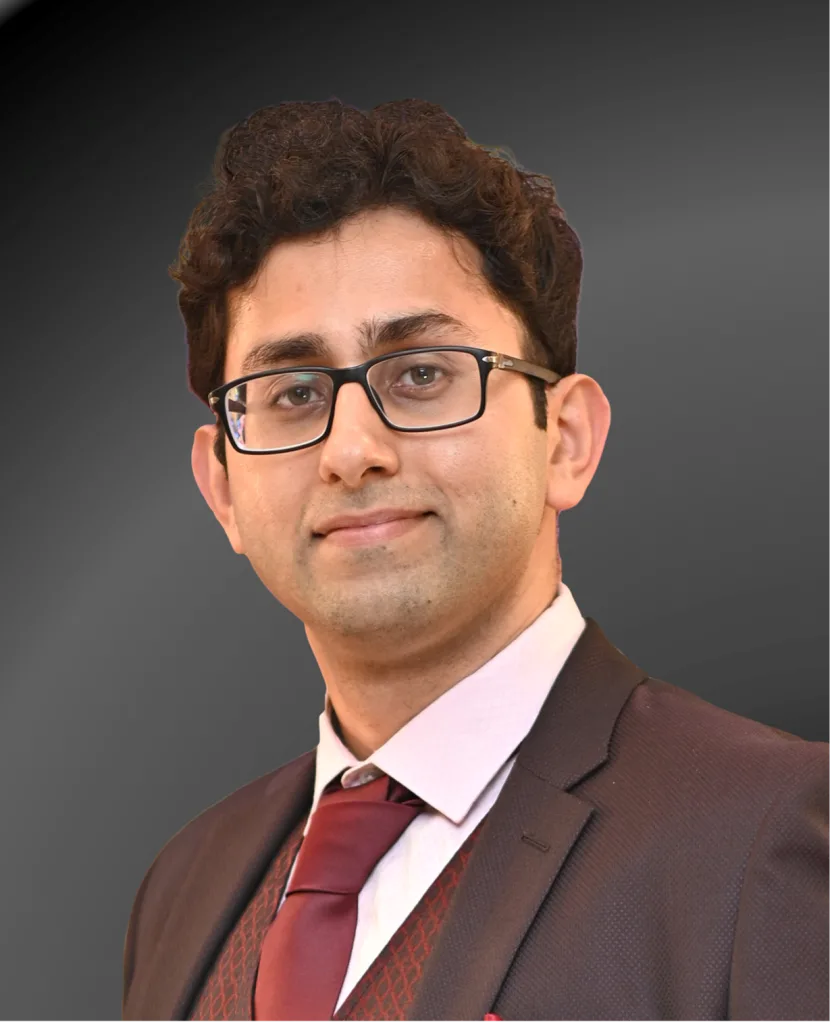
Chatterjee Receives NSF CAREER Award to Advance the Future of Medical Electronics through Body-Coupled Network of Devices
July 11, 2025Baibhab Chatterjee, Ph.D., assistant professor in the Department of Electrical and Computer Engineering at the University of Florida, has received a prestigious National Science Foundation (NSF) CAREER Award, the agency’s highest honor for early-career faculty. His funded project, “MED-IoB: Transforming Medical Electronics using Distributed Internet of Bodies (IoB) for Powering, Sensing, Communication and Synchronization,” seeks to revolutionize implantable and wearable medical electronics by enabling seamless data connectivity and power in a network of devices, leveraging the conductive property of the human body.
Read more: Chatterjee Receives NSF CAREER Award to Advance the Future of Medical Electronics through Body-Coupled Network of Devices »
Seminar: Xiaoyi Lu
June 24, 2025Dr. Xiaoyi Lu is an associate professor in the Department of Computer Science and Engineering at the University of California, Merced. He presents “Heterogeneity-Enriched Communication for Parallel and Distributed AI Systems” Tuesday, July 1 at 12:45pm in MALA 5050.
Read more: Seminar: Xiaoyi Lu »
Seminar: Sijia Liu
May 20, 2025Sijia Liu, Ph.D., is currently an assistant professor at Michigan State University. He presents “Machine Unlearning for Generative AI” Friday, June 6 at 12:45pm in MALA 5050.
Read more: Seminar: Sijia Liu »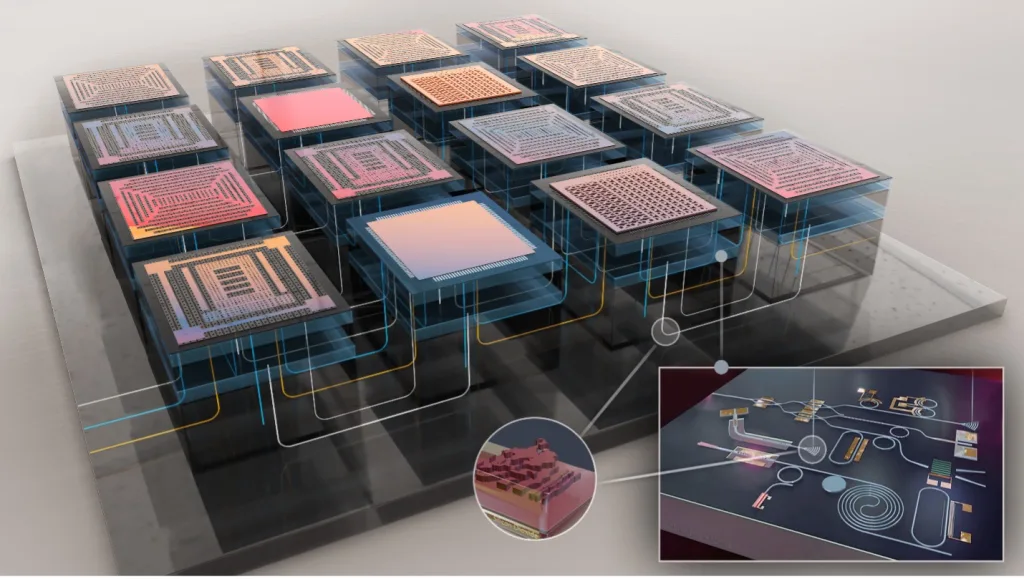
Dalir Joins National Effort to Enable 3D Optical Packaging for Next-Gen AI Chips
May 14, 2025Hamed Dalir, PhD, is part of a nationally-funded initiative to develop a transformative three-dimensional optical packaging platform that redefines how data is routed across and between chips. The project is led by Ali Adibi, PhD, professor in the Department of Electrical & Computer Engineering at Georgia Institute of Technology, in partnership with Dalir, Juejun Hu, PhD, associate professor in the Department of Materials Science & Engineering at the Massachusetts Institute of Technology, and colleagues at AIM Photonics, and nHanced Semiconductor. The team aims to unlock new levels of scalability, bandwidth, and energy efficiency by vertically stacking photonic layers and enabling seamless chip-to-chip optical communication.
Read more: Dalir Joins National Effort to Enable 3D Optical Packaging for Next-Gen AI Chips »
Fu & Dixon Work to Achieve Strategic Dominance
May 6, 2025Dr. Jie Fu (PI) has been awarded $1.3 million in funding from the DEVCOM Army Research Laboratory for “Strategic Planning in Hierarchical Games: Achieving Rapid Dominance in the Uncertain World of Conflict (Shadow).” Distinguished Professor Warren Dixon, chair of the Department of Mechanical and Aerospace Engineering at the University of Florida, serves as co-PI on the project.
Read more: Fu & Dixon Work to Achieve Strategic Dominance »
Laura Kim Works to Create Light-Matter Hybrid Quantum Building Blocks
April 18, 2025Laura Kim, Ph.D., has been awarded a DARPA Young Faculty Award in support of her project “Room-Temperature Strong Coupling in Intercalated 2D Plasmonic Systems.” The $500,000, two-year project seeks to unlock quantum phenomena that have traditionally remained exclusive to cryogenic temperatures, bringing them into room-temperature environments by using layered nanoscale materials that confine light with extreme precision.
Read more: Laura Kim Works to Create Light-Matter Hybrid Quantum Building Blocks »